

How Long, Lord?
When God Seems Silent

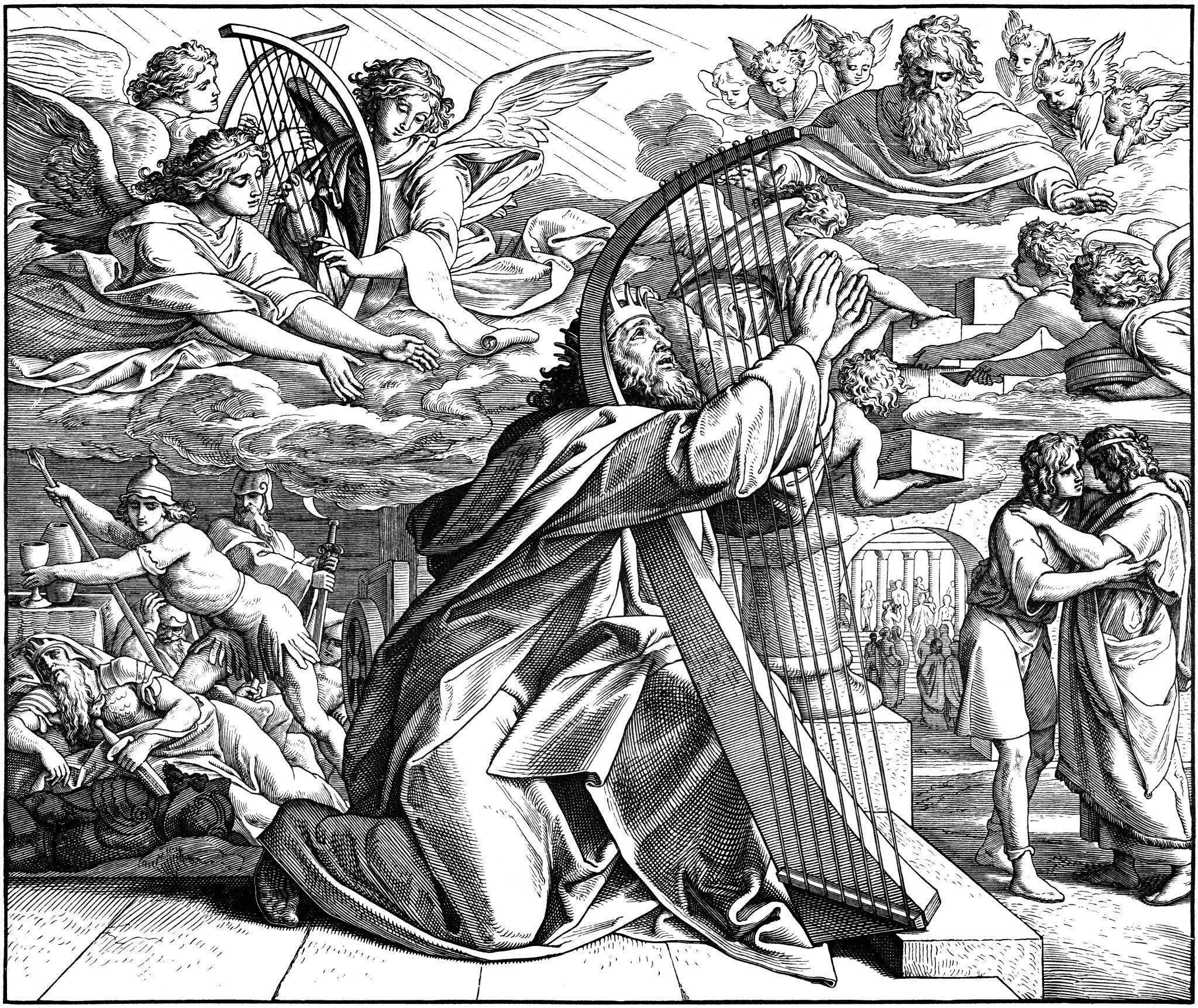
(Image: David Prays for Deliverance, woodcut by Julius Schnorr von Carolsfeld)
There are prayers in Scripture that sound almost shocking when we first hear them.
Not because they are irreverent.
Not because they are sinful.
But because they are so painfully honest.
One of those prayers appears in Psalm 13:
“How long, LORD? Will you forget me forever? How long will you hide your face from me? How long must I wrestle with my thoughts and day after day have sorrow in my heart? How long will my enemy triumph over me?” (Psalm 13:1-2)
David asks a question that countless believers have asked through the centuries:
“Lord, where are You?”
The Silence of God
There are seasons in the Christian life when God feels very near.
Prayer flows easily.
The Scriptures seem alive.
The heart is filled with confidence and peace.
Then there are other seasons.
The prayers seem to bounce off the ceiling.
The heavens appear silent.
We read the Scriptures faithfully, yet feel nothing.
We kneel to pray and find ourselves wrestling with anxiety, sorrow, and doubt.
David knew those seasons.
The great king of Israel. The man after God’s own heart. The psalmist whose songs still guide the worship of the Church.
Even he sometimes felt abandoned.
This should encourage us.
Not because suffering is pleasant, but because it reminds us that spiritual dryness is not proof of spiritual failure.
“Will You Forget Me Forever?”
David’s words are startling.
He does not merely say that he feels forgotten.
He asks whether God has forgotten him.
The question is bold.
Yet Scripture preserves it without embarrassment.
Why?
Because God already knows what is in our hearts.
The Psalms teach us that faith is not pretending everything is fine.
Faith is bringing our fears, doubts, griefs, and frustrations honestly before God.
Many Christians believe they must clean up their emotions before they pray.
David does the opposite.
He brings his emotions into prayer.
The Battle Within
Perhaps the most relatable line in the psalm is this:
“How long must I wrestle with my thoughts and day after day have sorrow in my heart?”
Anyone who has lain awake at three in the morning understands this verse.
The enemy is not always external.
Sometimes the battle is within.
We replay conversations.
We revisit failures.
We imagine disasters that have not happened.
We carry burdens that seem too heavy to bear.
The mind circles endlessly.
The heart grows weary.
David knew this struggle long before modern psychology gave it names.
The human condition has not changed.
The Courage to Lament
Modern culture is uncomfortable with lament.
We are told to stay positive.
To think happy thoughts.
To avoid negativity.
Yet Scripture gives us an entire category of prayer called lament.
Nearly a third of the Psalms fall into this category.
Why?
Because life in a fallen world includes sorrow.
Christians are not required to deny reality.
We are called to bring reality before God.
Lament is not the opposite of faith.
It is faith refusing to let go.
The unbeliever stops praying.
The believer keeps praying—even when the prayer consists of little more than “How long, Lord?”
The Turn
What makes Psalm 13 remarkable is not how it begins.
It is how it ends.
After four verses of anguish, David suddenly writes:
“But I trust in your unfailing love; my heart rejoices in your salvation. I will sing the LORD’s praise, for he has been good to me.” (Psalm 13:5-6)
Notice what has not changed.
The enemy has not disappeared.
The circumstances remain unresolved.
The heavens have not opened.
Yet David’s perspective changes.
He moves from what he feels to what he knows.
He knows God is faithful.
He knows God’s love endures.
He knows God’s promises can be trusted.
Faith in the Dark
The deepest faith is often not exercised in moments of triumph.
It is exercised in moments of uncertainty.
Anyone can praise God when the answer arrives.
Faith praises Him while waiting.
Anyone can trust God when the path is clear.
Faith trusts Him when the road disappears into darkness.
David teaches us that the Christian life is not a constant state of spiritual exhilaration.
Sometimes it is simply refusing to quit.
Sometimes it is praying one more prayer.
Reading one more Psalm.
Taking one more step.
Trusting God one more day.
Our Lord’s Own Cry
Ultimately, Psalm 13 points us toward Christ.
For Jesus Himself entered into the deepest experience of abandonment.
From the Cross He cried:
“My God, my God, why hast thou forsaken me?” (Matthew 27:46)
The Son of God entered fully into human suffering.
He knows what it is to feel abandoned.
He knows what it is to wait.
He knows what it is to suffer.
And because He has walked that road before us, we may walk it with hope.
The answer to David’s question is not found in immediate relief.
It is found in the character of God.
The God who seemed silent was still present.
The God who seemed distant was still faithful.
The God who seemed absent was still at work.
And so the Christian continues to pray:
“How long, Lord?”
Not as one without hope.
But as one who trusts that even in the silence, God has not forgotten His people.
This is a brilliant take on the silence of God. The Lord God is not our patsy, He is not dictated to or by our whims. He will not be commandeered by our cries. His outcome is all that matters. He will answer in his timing and on His terms. Not ours. The justice of God grinds slowly but surely, we must bow before Him, not shake our fist at his apparent silence. He is Lord, we are not.
Very timely message for me also. Thank you. But may I be so bold as to say that the common belief that God the Father abandoned Jesus on the cross and that the cry of "My God, My God why hast Thou forsaken me" is to be taken literally is in error. I firmly believe He was referring to Psalm 22 by quoting it's first line to proclaim His identification with the whole Psalm and with the line of David. It was affirming His Messiahship from the Cross. After all, the Trinity cannot be separated as they are One and His obedience by going to the cross was pleasing to the Father. I cannot think Jesus even felt abandoned. I like to think Jesus may have actually quoted the whole Psalm from the Cross as a prayer because it ends with the Greek tetelestai, "it is finished."